

Generative AI Landing Page Redesign: Metaphysic Case Study
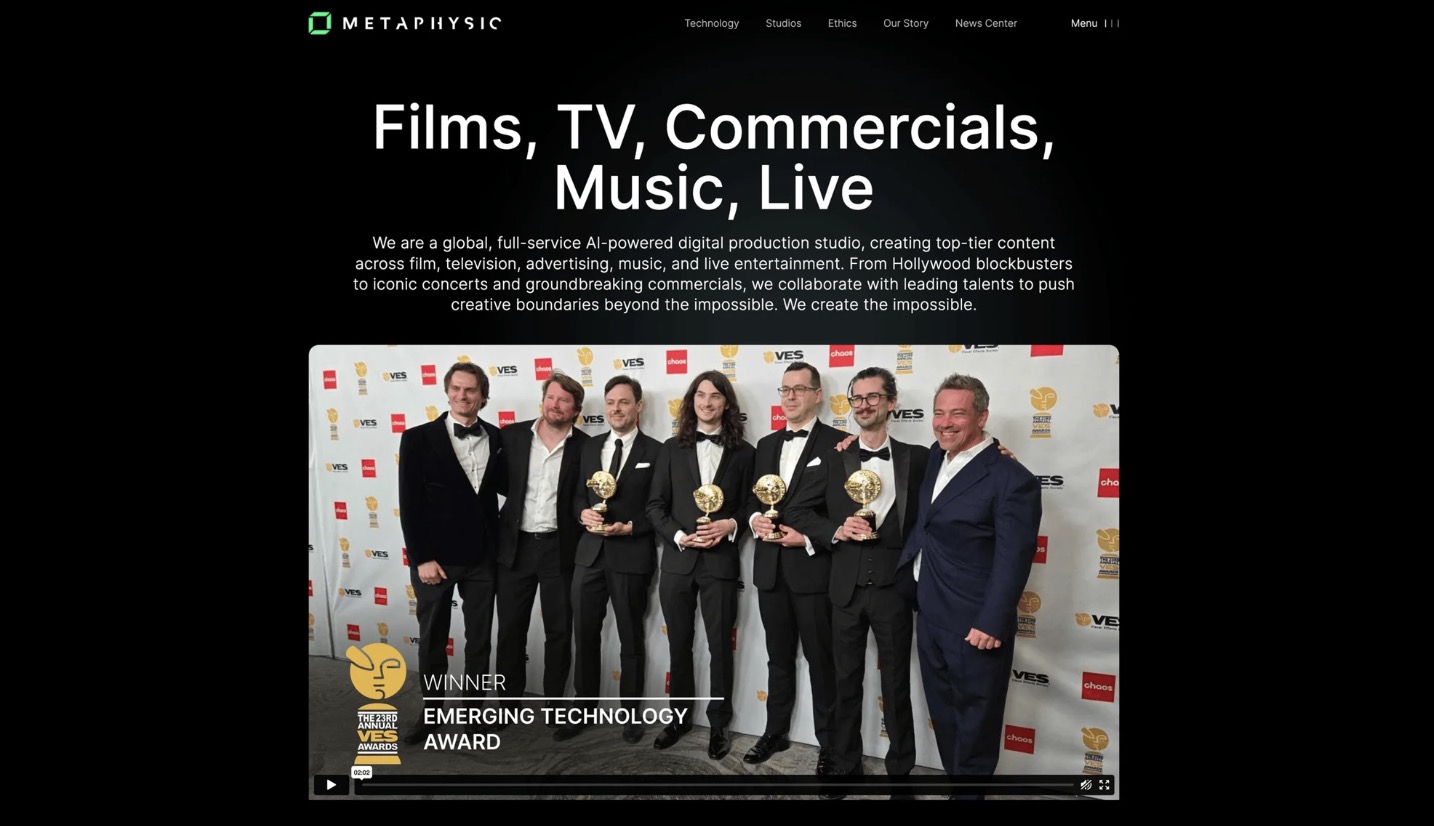
Generative AI Landing Page Redesign: Scaling Metaphysic Web Growth
A comprehensive web overhaul and modular design system for Generative AI leader Metaphysic, doubling landing page click-through rates and expanding primary US market reach.
Simplifying Hyper-Realistic AI for Global Audiences
Metaphysic developed groundbreaking, hyper-realistic artificial intelligence tools, yet their digital front door struggled to convey this capability clearly. The legacy website tried to speak to every demographic simultaneously, leaving technical developers, enterprise partners, and high-value investors sorting through dense technical jargon. My task was to audit the entire digital presence and design a structured user journey that communicated complex generative models without confusing first-time visitors.
Architecture Blueprints and Early User Testing
The overhaul began by dismantling the fragmented site navigation and mapping out dedicated visitor pathways based on distinct user intent. Developers needed immediate access to technical documentation and API specifications, whereas investors required high-level capability demos and commercial use cases. I built low-fidelity wireframes to establish logical hierarchy and tested these navigational flows early with test cohorts to ensure clear paths before moving into full UI production.
Building a Scalable Dark-Mode Design System
Rather than designing isolated pages, I constructed a component-driven, modular design system in Figma. The visual aesthetic adopted a high-contrast dark theme tailored to the futuristic nature of synthetic media, paired with sharp typographic hierarchy and reusable UI cards. This modular framework allowed internal developers to spin up new campaign landing pages in half the time while preserving visual continuity across every touchpoint.
Refining User Interactions with Prototype Audits
To validate the revised structure, interactive prototypes were subjected to user testing sessions to uncover points of friction in menu structures and call-to-action placement. Observing real-time interactions highlighted where users hesitated or misidentified navigation cues. Polishing these UI components ensured that technical capabilities such as real-time facial swapping and generative rendering were easy for non-technical stakeholders to understand.
Measuring Performance and Traffic Impact
Post-launch analytics confirmed a strong lift across engagement and conversion metrics. The streamlined page architecture doubled click-through rates on core landing pages, reduced bounce rates substantially, and established a steady influx of high-value US visitors.
| Metric | Before Redesign | After Redesign | Impact |
| Landing Page CTR | 2.1% | 4.3% | Click-through rates more than doubled |
| Bounce Rate | 58% | 39% | Session duration increased substantially |
| Returning Users | Baseline | +25% | Steady growth in repeat visitor sessions |
| US Primary Traffic | Baseline | 68% of new visitors | Successfully targeted primary market expansion |