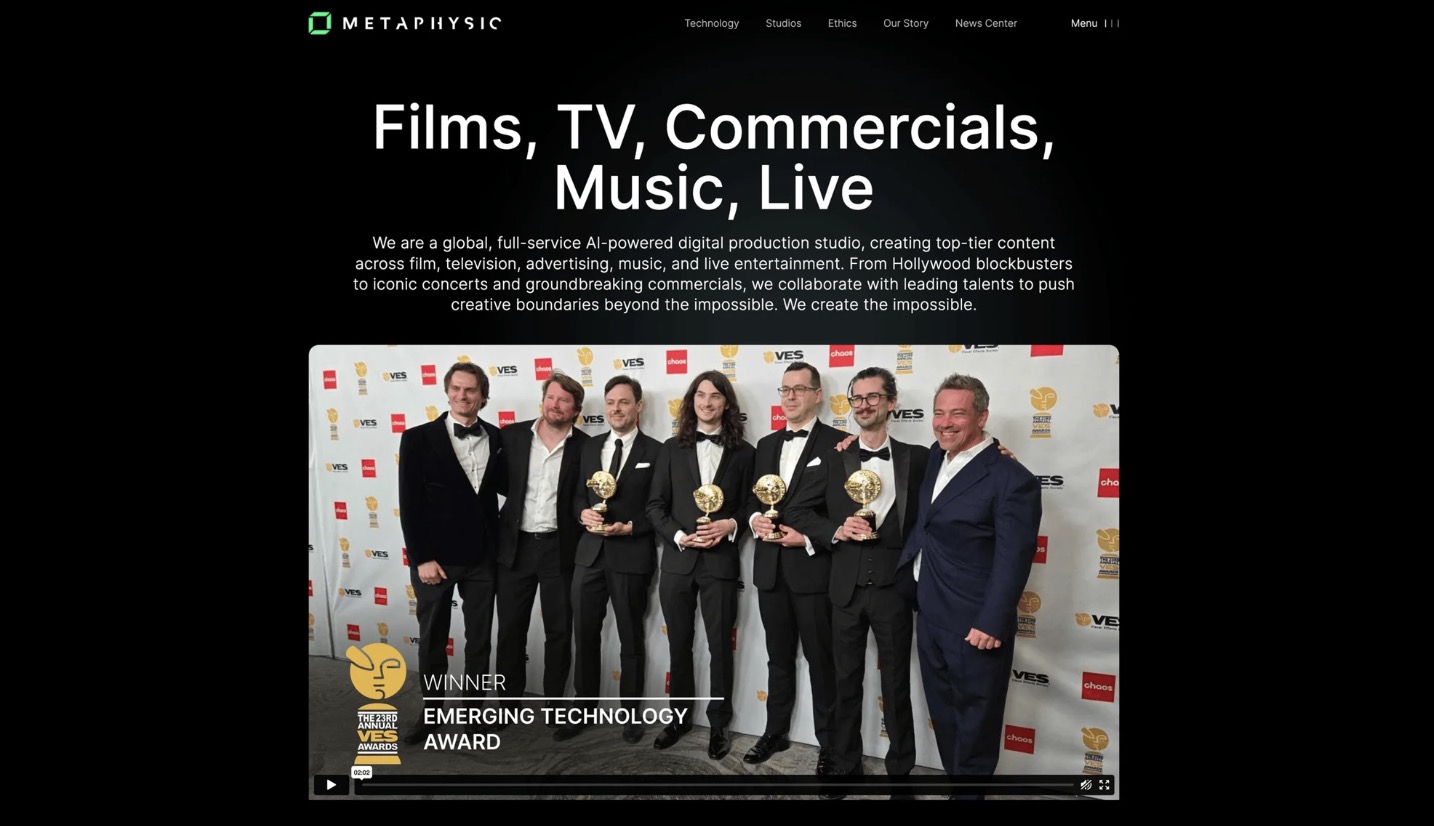
Reimagining the digital ecosystem for a global leader in Generative AI. I architected a modular design system and lead-gen framework that translated hyper-real technical solutions into seamless user journeys, resulting in a 100% increase in landing page CTR and a 30% surge in global traffic.
Project: Metaphysic Inc.
Digital Ecosystem Redesign
Role: UX Lead & Content Strategist
Context: Global leader in Generative AI and hyper-real synthetic media.
01_SYSTEM_OBJECTIVES
Metaphysic required a complete reimagining of their digital presence to translate complex generative AI solutions into clear, authoritative user journeys. I conducted deep-tier research—including stakeholder interviews and competitive audits—to align the site’s roadmap with primary KPIs: lead generation, investor engagement, and global market adoption.
02_STRUCTURAL_MAPPING
I architected a new information hierarchy and sitemap, establishing intuitive navigation paths for a high-density content site. Mid-fidelity wireframes were validated through early-stage testing to ensure logical flow and reduce friction before moving into high-fidelity production.
03_MODULAR_FRAMEWORK
Adopting a “content-first” methodology, I engineered a modular design system. This included scalable typography, a high-contrast technical palette, and reusable UI components. This system-led approach streamlined the development cycle and ensured brand consistency across all global touchpoints.
04_ITERATIVE_VALIDATION
Using interactive prototypes, I led usability testing to unearth and resolve friction points. By observing real-user interactions within the Generative AI product flows, we fine-tuned the UX for maximum clarity, ensuring that complex technical features were accessible to both developers and executive investors.
05_PERFORMANCE_METRICS
Post-launch analytics validated the architectural shift with significant surges in engagement:
- Conversion: CTR on key landing pages increased from 2.1% to 4.3%.
- Retention: 25% growth in returning user sessions.
- Efficiency: Bounce rate dropped from 58% to 39%.
- Targeting: 68% of new traffic successfully originated from the US primary target market.